
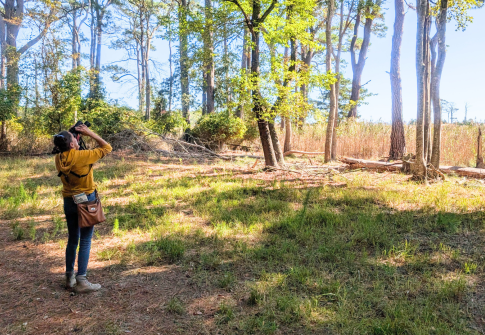
It seems that so many people have entered a new and exciting era of their lives lately - the birding era. Years ago you wouldn’t have looked twice at a gathering of tiny shorebirds on a mud flat, but now you find yourself getting distracted during a meeting when you’re facing the window. You’re late to an appointment because you thought you saw a Horned Grebe in its breeding plumage. You’d rather watch your backyard birdfeeder than binge the latest drama series on Netflix.
If any of this sounds familiar to you, you just might be in your birding era. Luckily, one of the best places to go birding in the entire state is right here on Maryland’s Coast. The diversity of habitats found within such a small, concentrated region lends itself to world-class birding opportunities all year long. From the quiet waters of a bald cypress swamp to the shallow, coastal bays and barrier island habitats, Maryland’s Coast should be on everyone’s list of top birding destinations.
We recently sat down with local birding expert, Scotty Astro, to find out what each of these habitats offers and what species are most likely to be spotted in them.
Pocomoke River & Pocomoke State Forest
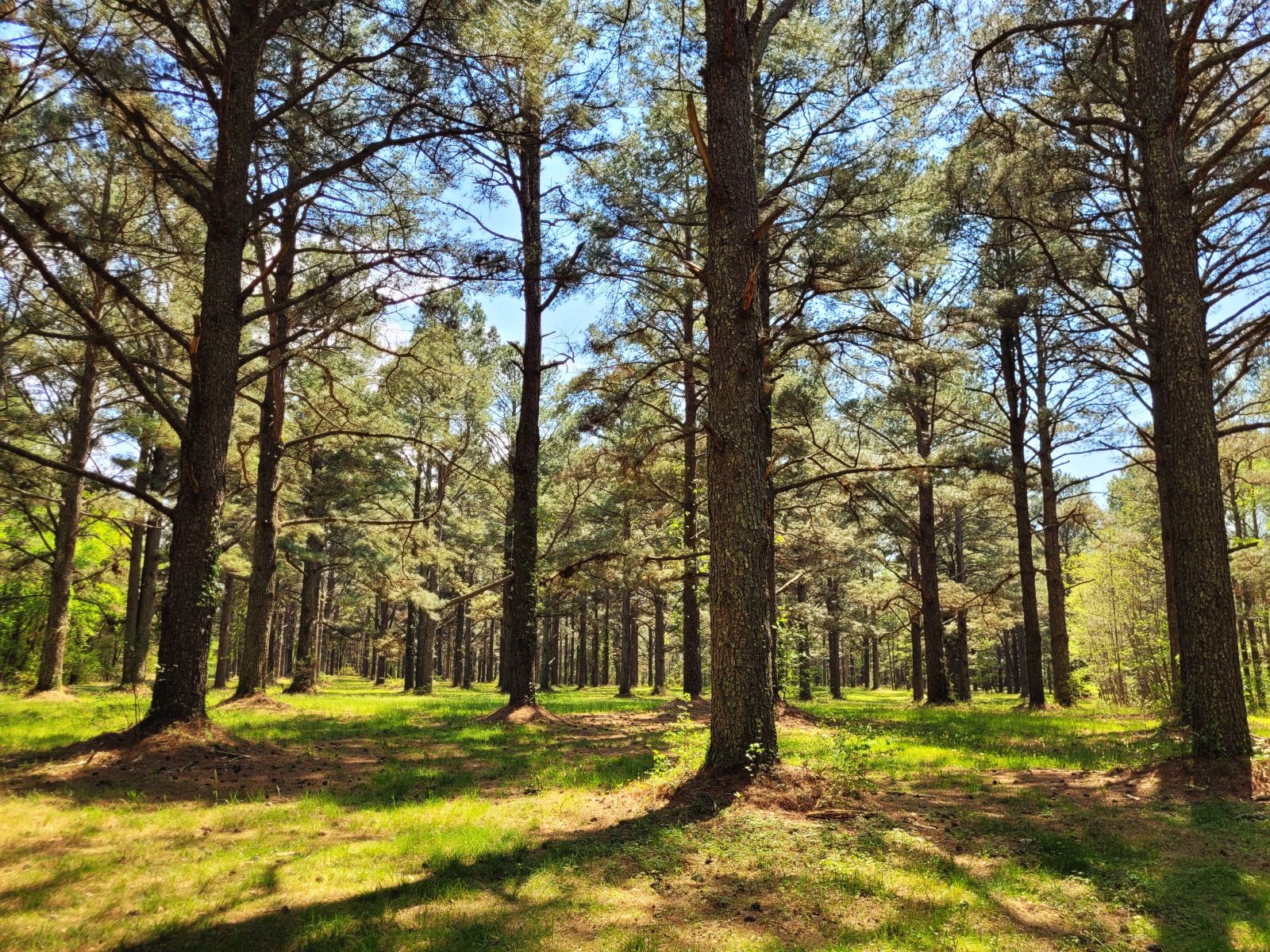
Photo: Less-dense edge of the Pocomoke State Forest
When visiting Maryland’s Coast, coastal species of birds are certainly a highlight, but tucked away just west of the coastline in the heart of Worcester County is the Pocomoke State Forest and the Pocomoke River. The Pocomoke River is largely undeveloped along its shorelines and portions of its watershed fall within the Nassawango Creek Preserve, an area that the Nature Conservancy says is “one of the last pieces of true wilderness left on the East Coast.”
The Pocomoke State Forest encompasses over 15,000 acres of forest habitat, with tracts of land protected on both sides of the Pocomoke River. The state forest, Nassawango Creek Preserve, and the river itself make up an enormous wildlife corridor, providing nesting grounds for many species, as well as an important stop for those migrating through.
“It’s a fantastic breeding ground with lots of food and lots of biodiversity,” says Astro. According to Astro, every species of woodpecker in Maryland, with the exception of the Yellow-bellied Sapsucker nest in the Pocomoke State Forest. Many woodpeckers prefer to nest in less dense forests, and sections of the forest have been managed to support this type of habitat.
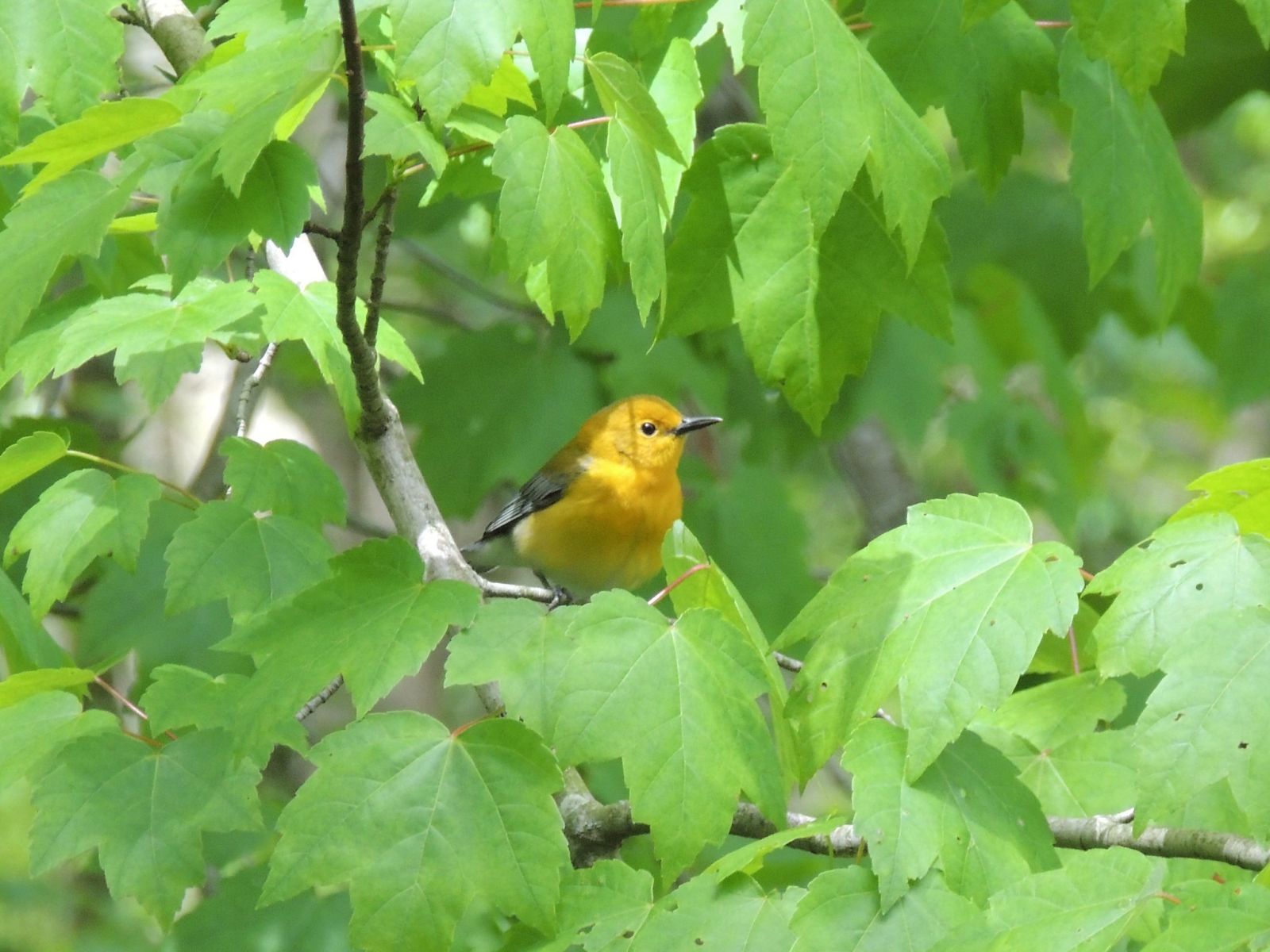
Prothonotary Warbler (photo credit: Scotty Astro)
Many species of warblers nest in Nassawango Preserve, including some uncommon species such as the Hooded Warbler and Kentucky Warbler. Nassawango Creek, a tributary of the Pocomoke River has become somewhat famous for the Prothonotary Warbler, as there’s even a hiking trail near the creek known as the Prothonotary Birding Trail.
One of the best ways to increase your chances of seeing many species is by canoeing or kayaking. “Birds aren’t as spooked when you’re on the water, rather than on land,” Astro explains. “Birds will get closer to you. It’s like they don’t feel threatened for some reason.” He reported being able to get up close to some Barred Owls and White-eyed Vireos when paddling Nassawango Creek.
Assateague and the Ocean City Inlet
The only barrier beaches in Maryland are found right here on Maryland’s Coast, which is another reason this area shines when it comes to birdwatching. “Barrier islands are the end of the land and we get a lot of birds that aren’t even supposed to be here,” Astro says. Many birds try to avoid flying over open water so “we find all these rare species on the barrier islands. It’s like they hit the ocean and they’re stuck here. Forest birds, shorebirds, ducks, loons, gulls - there’s so much diversity.”
Astro says it’s not just Assateague where rare species can be spotted. Despite Ocean City being a “concrete jungle,” birds are attracted to just about any tiny piece of green space, and even the smallest little parks like Sunset Park and Northside Park can be great places to spot seasonal migrants.
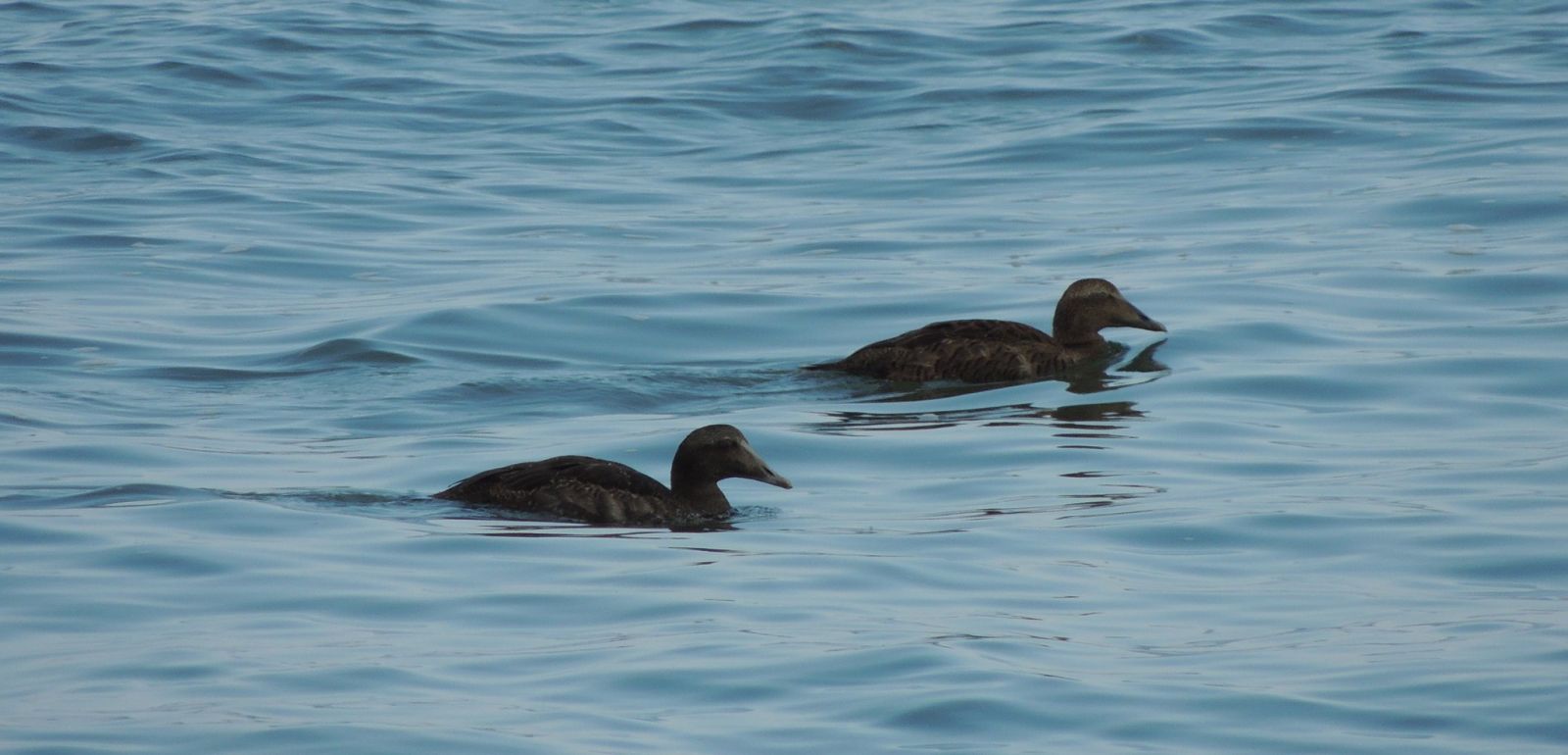
Common eiders (photo credit: Scotty Astro)
The Ocean City Inlet is also a hub of birding activity. Loons, scoters, and eiders can be seen into the spring, and even the occasional harlequin duck. The inlet is also a good place to see shorebirds like Dunlin, Ruddy Turnstones, Purple Sandpipers, and occasionally a Red Knot.
Not far from the inlet, Astro says Sunset Park is “fire during migration.” This tiny waterfront park has a variety of native plants and trees that provide habitat in an otherwise densely developed area. Rare birds like the Fork-tailed Flycatcher, Red Crossbill, and a variety of sparrows and warblers have been observed at Sunset Park.
Coastal Bays & Salt Marshes
With the cypress swamp to the west and barrier islands to the east, we can’t forget about the shallow, coastal bays and tidal salt marshes in between. Visiting Maryland’s Coast during your birding era would not be complete without spending some time observing this classic coastal landscape.
On the east side of the bays, there are several access points on Assateague like Old Ferry Landing and the Life of the Forest Trail that provide access to the marsh for birding. These are great places to spot a variety of wading birds like Snowy Egrets, Tricolored Herons, Green Herons, American Oystercatchers, Glossy Ibis, and White Ibis.
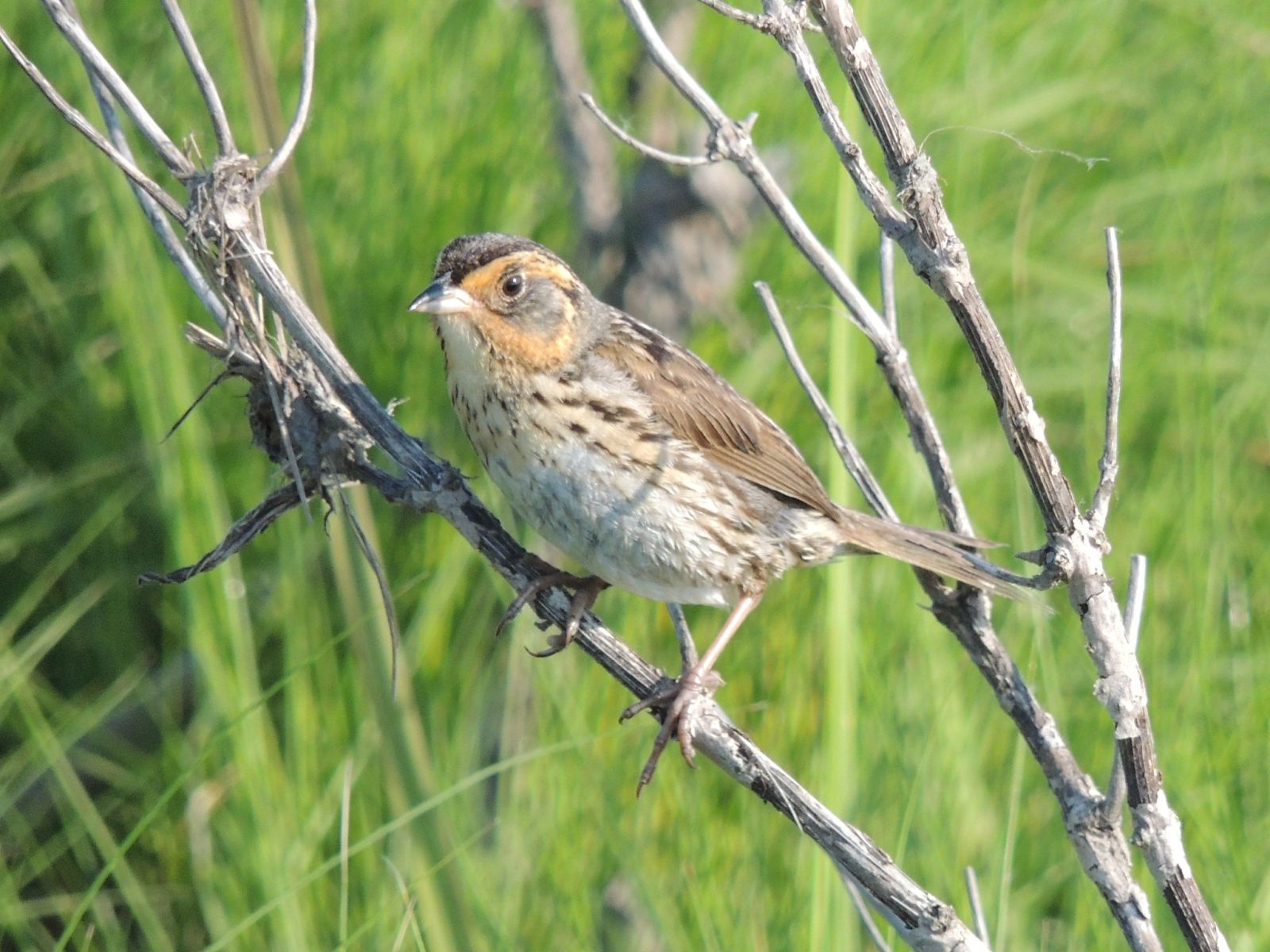
Saltmarsh Sparrow (photo credit: Scotty Astro)
On the west side of the bays, there are a few roads that lead down to the water’s edge like Taylor’s Landing Road and Truitts Landing Road. Astro says that these places are great for seeing less common species like the Seaside Sparrow and the Saltmarsh Sparrow.

No matter where you wander on Maryland’s Coast during your birding era, you’re never far from a new habitat to explore. In a single day you can paddle through a bald cypress swamp, scan the salt marsh for wading birds, and then stand on a barrier island watching shorebirds running about the surf. The remarkable concentration of forest, freshwater river, coastal bays, marsh, inlet, and ocean habitats within such a small geographic area is what makes this region exceptional. The diversity of landscapes creates a diversity of birds, allowing you to fully embrace your birding era on Maryland’s Coast - there may be no better place to experience so much variety, in so little space, all year long.
To find guided birding excursions across Maryland’s Coast, be sure to check out Maryland Ornithological Society and Delmarva Birding.
Modal title